Stolen from foster kids since you arrived: $0
Federal Commitment · May 2026 Vol. I · Iss. 01

End the Orphan
Tax.

The U.S. has been quietly taking foster kids' Social Security checks. The federal government just committed to ending it. Now Congress has to write it into law.

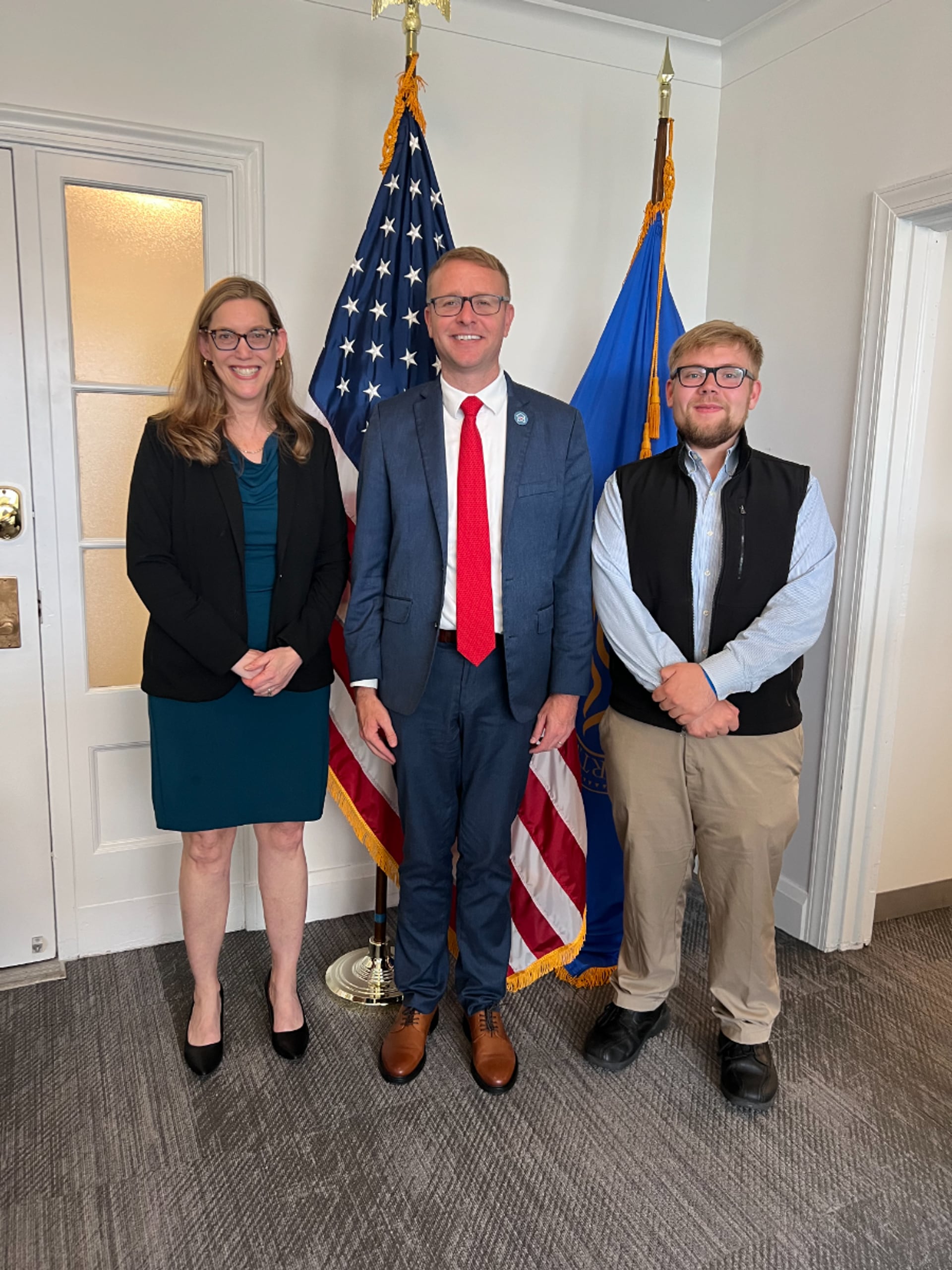
Justin Kasieta meeting with Asst. Secy. Alex Adams and Amy Harfeld at the U.S. Administration for Children and Families in May 2026
Historic · 05 / 2026
May 2026 · Washington D.C.
With Asst. Secy. Adams & Amy Harfeld at the Administration for Children & Families.
Photo
Amy Harfeld
Children's Adv. Inst.
The Brief
— in 3 Bullets
The Practice
$179m stolen from foster kids in 2018 alone.
The Commitment
A federal official, on the record, finally said no.
The Ask
Subscribe — follow this fight.
01 The Scale
$179m
Documented · CRS 2018

That's how much was taken in one year alone.

Self-reported. Not every state reported. The actual total is almost certainly higher. Most of the kids whose checks were taken never knew about it.

Source · Congressional Research Service · Report R46975
02 A Story · On the record

It happened to me.

"I was thirteen when my father died. Then the state of Michigan took the $18,000 he left behind."

03 In Plain English

What is the orphan tax, exactly?

orphan tax noun / ˈôr·fən taks /
1.

The practice by which a state, once it becomes a foster kid's legal caretaker, intercepts the child's Social Security checks — survivor benefits from a deceased parent, or SSI disability benefits — and uses them to reimburse itself for the cost of care.

2.

A form of double-billing. State and federal law already require the state to pay for foster care. The child is not notified. Most discover the diversion at 18 — when the money is gone.

04 The Mechanism

A quiet handover, in three steps.

No notice to the child. No consent. No accounting at age 18. The money is gone.

01/ Eligibility

A parent dies, or a child has a disability.

The child qualifies for monthly Social Security survivor benefits — or SSI disability benefits. These are earned protections, set aside by federal law in the child's name.

02/ Placement

The child enters foster care.

The state becomes legal caretaker — and quietly applies to the SSA to become the child's representative payee. Without notice. Without consent.

03/ Diversion

The state takes the check.

An average of $1,100 / month stops going toward the kid's future and starts reimbursing the state for foster care it was already required to pay for.

05 The Federal Commitment
Historic · 05 / 2026
Photo · Amy Harfeld
Children's Adv. Inst.

For the first time, a federal official said no.

"
There is no moral justification for why orphans should have to pay their own way.
AA
Alex Adams Asst. Secy., Administration for Children & Families · U.S. HHS

Asst. Secy. Adams has been a non-stop champion for this movement. He has committed the federal government to ending this practice for orphans and for disabled foster kids both. No federal administration has ever taken this position before.

The Latest · 06 / 2026
As reported by The New York Times · June 11, 2026

The First Lady just launched savings accounts for foster youth.

First Lady Melania Trump and Treasury Secretary Scott Bessent announced Fostering the Future Accounts — the first federal savings-and-investment vehicle built for kids in foster care. New federal guidance lets child-welfare agencies open the accounts as guardians, and 23 governors have already pledged to set them up for foster children in their states. The movement to stop taking foster kids' money is becoming a movement to help them build it.

Read the story in The Times →
06 What still has to happen

Adams did his part.
Now Congress.

An executive commitment is a beginning. A permanent fix needs federal statute — covering both survivor and SSI benefits. They haven't moved yet.

Executive Branch · ✓

Committed.

Asst. Secy. Adams & the ACF — on the record, for all benefits, May 2026. Historic. First administration ever.

Legislative Branch · ?

Outstanding.

House and Senate have not codified the commitment. Without statute, the practice can resume under any future administration.

07 Three Things · Ten Minutes Each

Foster kids can't lobby for themselves.

Each of these takes about ten minutes. Each one matters.

1Phone

Call your Senators & Rep.

A phone call carries more weight than an email. Ask them to codify the federal commitment — survivor and SSI benefits both — into federal law.

Find Your Reps →
2Newsletter

Subscribe for Updates.

Get the inside story as it unfolds — every step Adams takes, every move (or refusal to move) in Congress. Free. Weekly. Direct from Justin.

Subscribe on Substack →
3Share

Share the 9-slide Brief.

Most policymakers and journalists have never heard of the orphan tax. Send the brief to one person who works in policy or media.

Get the Brief →
08 Subscribe

Follow this fight in real time.

I'm writing a weekly newsletter from inside the campaign — what Adams is doing, what Congress isn't, and what foster youth are saying. Free. Direct. No spam.

$179M
Stolen / Year
Weekly
Cadence
Free
Always
Subscribe to follow this fight

Signs you up right here — free, no spam, unsubscribe any time.

09 Who Is Doing This
Justin Kasieta, founder of The Orphan Tax campaign and former foster youth
Justin Kasieta
Former Foster Youth · Michigan
Univ. of Michigan, '23
Founder, theorphantax.org
Testified · MI & KS legislatures

My father died of cancer when I was thirteen. He left behind five children. I was the oldest.

Within a year, my four siblings and I were placed in foster care in Michigan. We were not warned. We were not consulted. We were thirteen, eleven, nine, seven, and five years old. On the day we entered care, the state of Michigan quietly applied to the Social Security Administration to become the representative payee for my survivor benefits. Unlike most foster kids, I knew — and I've spent years since fighting to end the practice.

Every month for the next three years, the check my father had earned for me was redirected. Over $18,000 in total, silently intercepted to reimburse the state for the cost of my own foster care. Care the state was already required, by federal and state law, to pay for. It would not have made me rich. It would have meant a security deposit. A car. The first semester of a degree. A foundation for a future.

Most foster kids never find out. By the time they age out, the money is gone.

I went on to graduate from the University of Michigan. And I started asking questions. The questions led to the Congressional Research Service report. The CRS report led to a $179 million figure for one year. The figure led to the rest of you: tens of thousands of children, just like me, whose money has been quietly taken in the name of double-billing the same care the state was already paying for.

I testified before the Michigan Senate. I testified, virtually, before the Kansas House. My story has been carried by CBS Sunday Morning, NPR, The Detroit News, and The Marshall Project. In May of this year, I sat across the table from Assistant Secretary Alex Adams of the U.S. Administration for Children & Families. He committed the federal government to ending this practice for orphans and for disabled foster youth both — and ACF is actively working on the SSI side as well.

That is the breakthrough. It is also not the finish line. Executive commitments can be reversed. A permanent fix needs Congress.

I'm writing about all of it. Subscribe for the next chapter.