Disabled youth are being left behind. Learn why →
Federal Action Justin's Story The Issue FAQ Watch In the News State Map Blog Take Action Contact

Advocacy · Legislation · Justice

Let's End the Orphan Tax

Foster kids deserve their own money. We're making sure they get it.

$0
Documented taken from foster youth in 2018
0
States have moved to end this practice
$0/sec
Being taken from foster children right now
Since you opened this page, an estimated $0 has been taken from foster children

The government took $179 million from foster kids — including me.

When a parent dies or becomes disabled, Social Security sends monthly checks to support their child. But when that child is in foster care, the state pockets the money — leaving youth with nothing at 18.

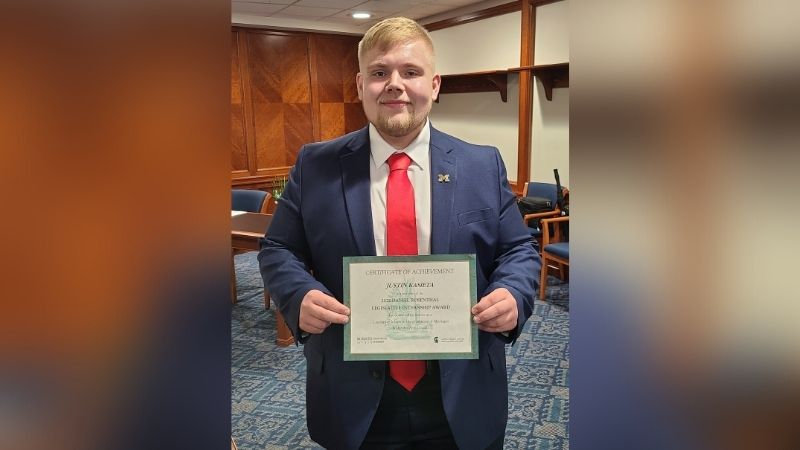
Justin Kasieta in a navy suit holding a Certificate of Achievement at the Michigan State Capitol

I was 13 when I lost my father. Then the state took what he left behind.

Justin was 13 when he heard the words no child should hear. His father — the man who taught him to ride a bike, who worked overtime to keep the lights on — was gone. Cancer had taken him in months. Within a year, Justin and his four siblings were in foster care.

What I didn't know right away: the state of Michigan had quietly applied to become the representative payee for my Social Security survivor benefits. No one told me. No one asked permission. Over three years, more than $18,000 — money my father had earned through a lifetime of work — was silently intercepted to reimburse the state for my care.

"Nobody told me. My father worked his whole life, and the money he left behind was quietly taken to pay the state back for my foster care. That could have been college tuition, a security deposit, a foundation for my future."

Today, Justin is a University of Michigan graduate and policy advocate. He has testified before the Michigan Senate and Kansas House, urging passage of legislation to ensure no foster child ever faces the same betrayal.

What Is the Orphan Tax?

It's simpler — and worse — than you think. And for disabled youth, it's even worse.

When a parent works, they pay into Social Security. If that parent dies, their children receive monthly survivor benefits. If a child has a disability, they may qualify for SSI disability benefits. Neither is welfare. Neither is charity. These are earned protections — a safety net designed for the most vulnerable children in America.

Now imagine you're one of those children and you end up in foster care. You'd think those checks would be saved for you — for college, a first apartment, medical equipment, therapy. Instead, the state quietly takes that money and uses it to pay itself back for the cost of your foster care. Nobody tells you. Nobody asks permission.

By the time you age out at 18 — often with nothing but a trash bag of belongings — thousands of dollars meant for you have already disappeared. For disabled youth, this is even more devastating. They face higher barriers to employment, greater housing instability, and more expensive medical needs. The money taken from them isn't just a loss — it's a life sentence of deeper poverty.

The state is already required by law to pay for foster care. Taking a foster kid's benefits on top of that is double-dipping. And here's the part that should make everyone angry: while 37 states have moved to protect survivor benefits, most reforms don't explicitly cover disabled youth receiving SSI. These children are being left out of the very reforms meant to protect them.

Either both practices are wrong, or neither is. This is why clarity matters. Every reform bill, every executive order, every policy change should equally apply to all Social Security and other benefits and assets of foster children. We need to ensure that comprehensive reform truly means all vulnerable children are protected from government overreach by misguided public agencies.

1
💔
A parent dies — or a child has a disability
The child qualifies for survivor benefits or SSI disability benefits — money meant to protect them.
2
🏣
The child enters foster care
The state becomes the child's legal caretaker and quietly applies to control their benefit checks.
3
🚫
The money vanishes
Instead of saving it for the child, the state pockets the money — including disability benefits that disabled youth depend on for survival.
The Bottom Line

Children who have already lost everything are being charged for their own care. States collected $179 million from foster youth in 2018 alone — typically over $900/month per child. Recent reforms have started to protect survivor benefits — but disabled youth receiving SSI are still being left behind. That's not reform. That's a gap we have to close.

🏠
10 mo.
of rent in an average U.S. city
🎓
2 yrs
of college textbooks and supplies
🚘
1
reliable used car for work and life
💪
3 yrs
of therapy or counseling sessions

What one year of average benefits (~$8,400) could provide for a foster youth aging out of care

Disabled Youth Are Being Left Behind.

0
days since the ACF letter — and disabled youth are still not included.

The recent letter from the Administration for Children and Families (ACF) to 39 governors does not mention foster youth receiving SSI disability benefits. The letter took on survivor benefits — with the door open to end this predatory practice once and for all, as Dr. Adams' own home state of Idaho is now pursuing legislation that includes ALL benefits. While 37 states have moved to protect foster youth from benefit diversion, children with disabilities in foster care may still have their benefits taken. Neither youth nor disability rights leaders will stand to have foster youth receiving SSI left out of a fix.

This is a moral failure. If it's wrong to take survivor benefits from a child whose parent died, it's equally wrong to take disability benefits from a disabled foster child whose needs will extend long into the future. We cannot protect one group while leaving another equally vulnerable group behind and call it justice.

Either both practices are wrong, or neither is. There is no principled middle ground.

This is why clarity matters. Every reform bill, every executive order, every policy change should equally apply to all Social Security and other benefits and assets of foster children. We need to ensure that comprehensive reform truly means all vulnerable children are protected from public agencies diverting what belongs to them.

We ended the Orphan Tax. Now it's time to end the Disability Foster Tax.

The ACF Letter: A Breakthrough With a Gap

On December 11, 2025, the federal government took a historic step — but left the most vulnerable children behind.

✅ Historic first — federal government calls on states to stop
❌ No mention of SSI / disability benefits
🇺🇸
Administration for Children and Families
U.S. Department of Health and Human Services
December 11, 2025
To the Governors of 39 States:
State child welfare agencies are diverting foster youths' earned Social Security survivor benefits — money earned through a deceased parent's lifetime contributions — to reimburse their own costs. This practice, which we call the "orphan tax," must end.

In a subsequent NPR interview, Adams estimated the nationwide total of seized survivor benefits at approximately $34 million — a fraction of one percent of the total child welfare bill.

NO MENTION OF SSI / DISABILITY BENEFITS
Respectfully,
Alex Adams
Assistant Secretary, ACF

The ACF letter was a landmark moment. For the first time, the federal government formally called on states to end the orphan tax. It put 39 governors on notice.

But the letter addressed only survivor benefits. It said nothing about disabled foster youth whose SSI disability benefits are also being seized by states. As NPR reported, SSI has different federal statutory rules, meaning a fix likely requires Congressional action.

Watch the Nation Light Up

States are taking action — one by one. Watch them drop into place.

Full Reform
Partial Reform
Previously Introduced
No Action
= Legislation currently pending
0
Full Reform
0
Partial Reform
0
Introduced
0
No Action
In Partnership With Children's Advocacy Institute Leading the national campaign to end foster youth benefit diversion since 2019
Visit CAI →

Foster Youth Leading the Change

These former foster youth experienced the orphan tax firsthand. Now they're fighting to make sure no one else has to.

Justin Kasieta

Justin Kasieta

Founder, TheOrphanTax.org

After discovering Michigan took $18,000 of his survivor benefits, Justin became a leading voice for reform. He has testified before state legislatures in Michigan and Kansas, and his story has been featured on CBS Sunday Morning and NPR. A University of Michigan graduate, Justin now works to ensure every foster youth keeps the benefits their parents earned for them.

Michigan SB 18 Advocate Kansas HB 2552 Testimony

Marissa Pike

Foster Care Advocate, Massachusetts

Marissa had her benefits taken by DCF for six years. She aged out of foster care at 18 with nothing, only to learn later that thousands of dollars meant for her had been used by the state. Now she speaks out to help other foster youth understand their rights and fight for what's theirs.

Youth Advocate Public Speaker

More Advocates Needed

Your voice matters

Were you a foster youth who had your benefits taken? Your story can help change the law. Sharing your experience with legislators, journalists, and the public is one of the most powerful ways to drive reform.

Share Your Story
🇺🇸
A Message to Federal Leadership

The Next Step: Federal Action

As of February 2025, 37 states have acted. Now it's time for the federal government to finish the job and protect all foster youth.

1

Expand Protections to Disability Benefits

The Administration for Children and Families (ACF) and Social Security Administration (SSA) should extend the same protections to Social Security disability benefits (SSI) — not just survivor benefits.

Foster youth with disabilities face the same diversion of their benefits. They deserve equal protection.

2

Raise the $2,000 Asset Limit

Congress should pass legislation raising the outdated $2,000 SSI asset limit to $10,000 and index it to inflation.

Youth aging out of foster care shouldn't be penalized for saving. The current limit — unchanged since 1989 — forces them to stay poor to keep their benefits.

3

Exclude IV-E Payments from Income Limits

Title IV-E foster care maintenance payments should not count as income toward SSI income limits.

Foster youth shouldn't lose their disability benefits because the government's own foster care payments push them over arbitrary income thresholds.

An Open Letter to Federal Leadership

To the Secretary of Health and Human Services, the Commissioner of Social Security, and Members of Congress:

For decades, state child welfare agencies have quietly intercepted Social Security benefits meant for foster children — using funds intended to help orphaned and disabled youth to instead reimburse themselves for the cost of care. This practice, often called the "orphan tax," has taken hundreds of millions of dollars from our most vulnerable children.

Thanks to bipartisan efforts, as of February 2025, 37 states have now moved to end this practice. But federal action is needed to protect all foster youth nationwide and close remaining loopholes.

We respectfully urge you to:

  1. Extend current survivor benefit protections to Social Security disability benefits (SSI)
  2. Support legislation to raise the $2,000 SSI asset limit to $10,000 and index it to inflation
  3. Ensure Title IV-E foster care payments do not count as income toward SSI eligibility

These children did not choose to lose their parents. They did not choose to enter foster care. They should not be forced to pay for their own care with benefits their parents earned for them.

The federal government has the power to end this injustice for good. We ask you to act.

— Foster youth, advocates, and concerned citizens

14 States Have Not Taken Any Action

The following states have not yet taken any form of action to protect foster youth from benefit diversion:

Alabama · Arkansas · Delaware · Georgia · Indiana · Kentucky · Montana · North Carolina · North Dakota · Oklahoma · South Carolina · South Dakota · West Virginia · Wyoming

If you live in one of these states, contact your representatives and urge them to act. Foster youth in your state are still having their benefits taken.

Self-Sufficiency Saves Money

When foster youth keep their benefits, they can build stability — reducing long-term reliance on public assistance. Use the calculator to see the impact.

1,000 40,000 80,000
40,000–80,000 foster youth are eligible for benefits (Children's Advocacy Institute)
0% 25% 100%
Research shows financial stability reduces homelessness by ~29% (Annie E. Casey)
$200K $300K $400K
Benefits Preserved
$336M
~$900/month × 40,000 youth
Potential Lifetime Savings
$3B
10,000 youth avoid bad outcomes × $300K
Return on Investment
8.9x
Lifetime savings ÷ benefits preserved

The math is simple: Each foster youth who ages out without resources costs taxpayers an estimated $300,000 over their lifetime ($4.1 billion per annual cohort). Without support, 1 in 4 become homeless within two years, 40%+ are incarcerated by age 20, and fewer than 10% earn a college degree (vs. 49% of the general population). Homelessness alone costs taxpayers $35,578/year per person; incarceration costs $44,090/year federally ($33,274 average state cost). Letting youth keep their benefits helps them build stability and breaks the cycle — saving taxpayers billions.

GOP Leaders Speak Out

From limited government to property rights — why Republicans are leading the charge to end the orphan tax.

FREOPP Foundation for Research on Equal Opportunity
Property Rights: States are taking assets that legally belong to children — a fundamental violation.
📈 Taxpayer Savings: Each foster youth facing poor outcomes costs taxpayers ~$300K. Protecting benefits saves money long-term.
America First Policy Institute Center for the American Child

Supports ending this practice as state-level bureaucratic overreach that harms children while expanding government control over private assets. Published model executive order language for states.

Organizations Supporting Reform

From progressive child welfare advocates to conservative policy institutes — ending the orphan tax has united voices across the political spectrum.

Also endorsed by: National Association of Counsel for Children, Center for the Study of Social Policy, National Center for Housing & Child Welfare, National Disability Institute, and bipartisan congressional champions Rep. Danny K. Davis (D-IL), Rep. Don Bacon (R-NE), and Rep. Jamie Raskin (D-MD).

Leaders Across the Aisle Speak Out

From the Senate floor to the halls of HHS, lawmakers and officials from both parties have condemned the orphan tax.

D
"When I heard about this, I nearly fell out of my chair... Dozens of states are now secretly screening the kids in their care to see if they would be eligible for Social Security benefits, sometimes even hiring data mining companies to try to identify targets, and then funneling those Social Security benefits into state coffers to pay for anything from paper clips to prisons."
R
"There is no moral justification for why orphans should have to pay their own way."
Alex Adams HHS Assistant Secretary for Children and Families · NPR, Jan 2026
R
"Charles Dickens couldn't have conceived of a plot this cynical."
Alex Adams HHS Assistant Secretary for Children and Families · NPR, Jan 2026
D
"It's like something out of a Charles Dickens novel. This is like confiscating someone's Social Security benefits because they availed themselves of the fire department."
Rep. Jamie Raskin U.S. House of Representatives (D-MD)

What People Ask Us

Yes. Federal and state law already require the government to cover the cost of foster care. That's funded through taxes, Title IV-E of the Social Security Act, and other programs. Taking a child's personal Social Security benefits on top of that is double-dipping — the state is billing the child for care it was already obligated to provide. Children in foster care have no obligation to pay for their care, any more than public school children have any financial obligation to pay for their public education.
Barely. According to the Congressional Research Service, state child welfare agencies spent approximately $33 billion in FY2018. The $179 million taken from foster youth amounts to about 0.5% of overall spending — a rounding error for state budgets, but a transformational asset for foster youth facing homelessness and unemployment. In Massachusetts, diverted benefits represent just 0.01% of the state's total child welfare spending. While the impact to state budgets is minimal, the impact of conserving these benefits for youth is monumental. States can fill any budget gaps through unused program dollars (reversions), Title IV-E administrative funds, and programmatic efficiencies.
No. The 2003 Keffeler decision was a narrow ruling around the anti-attachment clause of the Constitution — it did NOT establish precedent regarding the constitutionality, legality, or advisability of this practice. The Court explicitly declined to rule on other constitutional issues, noting that agencies could be challenged elsewhere for violating their fiduciary duties under § 405(j). Additionally, Keffeler was decided before ABLE accounts were established in 2014, which now allow disabled youth to save up to $100,000 without losing SSI eligibility — making benefit conservation far more practical than in 2003.
This concern reveals paternalistic and prejudiced presumptions about foster youth and poor people. Do we second-guess how seniors use their Social Security benefits? How young adults use an inheritance? There's no evidence behind this fear. On the contrary, studies document that youth use conserved funds for housing, transportation, food, education, childcare, and mental health services. States can require financial literacy training. For disabled foster youth receiving SSI, funds can be placed in ABLE accounts or Special Needs Trusts — accounts that can only be used for specific purposes like housing, education, transportation, and healthcare. Workers with disabilities earn on average 37% less than their peers and have increased healthcare expenses, making benefit conservation even more critical.
No. This has long been the greatest fear, but it hasn't happened in states that have enacted reform. If an agency's primary duty is to serve the best interests of children, it would be impossible to justify not pursuing funds that could meet their needs — and would expose the agency to liability. Screening for benefits is already standard practice when assessing a child's medical and educational status. States that have stopped taking benefits report that social workers are more motivated to screen for benefits when they know the youth will actually benefit from greater long-term economic stability. New reform laws require both screening/application for benefits AND prohibition on taking them. Additionally, agencies can recoup administrative costs through Title IV-E funding.
No. This is increasingly false. To date, 37 states and jurisdictions have taken action to preserve foster youth benefits, from red to blue to purple states. Ten states have enacted reforms conserving all Social Security benefits. Eighteen have enacted partial reforms. Nineteen have pending legislation. This bipartisan momentum shows the moral clarity of this issue: taking money from orphaned and disabled children is wrong, period.
There's a fundamental difference. When a disabled child lives at home and receives benefits, the entire household benefits from greater economic security. The child derives direct benefit. When a disabled child is involuntarily taken from their family and placed in foster care, and their benefits are intercepted to offset care costs, the child derives no additional benefit whatsoever. They receive precisely the same foster care services as peers without benefits. The only entity that benefits is the agency, which defrays its own expenses without providing any additional benefit to the child. Foster youth also enter care involuntarily and are never informed their benefits were taken — unlike other beneficiaries who make informed decisions about institutional care and receive notice, accounting statements, and opportunities to be heard.
No — reform corrects an ongoing inequity. Social Security benefits are the private property of beneficiaries, not a slush fund for agencies. Federal and state law require agencies to pay for the care of all children. Disabled and orphaned foster youth are currently singled out to pay for their own care while the state pays for everyone else's. There is no rational basis for treating these children differently. Ending this practice eliminates the inequitable treatment of charging one group of foster youth for their care while paying for all others. Black and brown children are disproportionately represented in foster care and even more disproportionately impacted by disabilities — addressing this issue helps alleviate the inequity of perpetuating additional financial hurdles for these youth.
Most don't. They're children when it happens, and no one is required to tell them. Many foster youth age out of the system at 18 with nothing and never learn that thousands of dollars were collected in their name and used by the state. Some find out years later when they try to access benefits or file taxes and discover the paper trail.
According to the Congressional Research Service, states self-reported using $179 million in children's Social Security benefits to reimburse foster care costs each year as of 2018 — and that figure is low because not all states reported data. Benefits are typically over $900 per month per child. For a child in foster care for several years, that adds up to tens of thousands of dollars. Justin Kasieta had over $18,000 taken. About 10-20% of foster youth are eligible for survivor or disability benefits.
A lot, actually — and this can be addressed by both states AND the federal government. Since NPR and The Marshall Project brought national attention to the issue in 2021, 37 states have taken action through legislation or executive orders. In January 2026, the federal government issued its first-ever directive telling states to end the practice. Congress is also considering federal legislation. Both state and federal action are needed to protect all foster youth nationwide and ensure disabled youth aren't left behind.
In most cases, no. Once the state has spent the benefits, there's no established process for reimbursement. Some states that have passed reforms are looking at retroactive solutions, but for most former foster youth, the money is gone. That's why prevention — stopping this practice before more money is taken — is so critical.
"That can't be right. That can't be a practice that we're doing."
Teresa Casados, New Mexico child welfare director, upon learning her state seized foster children's benefits
NPR Morning Edition · September 2023

What Would You Do With That Money?

The average foster youth loses over $900/month in diverted benefits. Justin lost $18,000. Enter any amount to see what it could mean for a young person aging out of care.

If a foster youth had
🏠
14 months
of rent in an average U.S. city
🎓
3.6 semesters
of community college tuition
🚘
2 reliable
used cars to get to work
💧
14 months
of groceries for one person

Leaders Call It What It Is: Stealing From Orphans

R
"Charles Dickens couldn't have conceived of a plot this cynical."
Alex Adams HHS Assistant Secretary · NPR, Jan 2026
R
"This is government overreach into kids' private assets. Because it wasn't the state's money to take and they took it anyway."
Alex Adams HHS Assistant Secretary · NPR, Jan 2026
R
"There is no moral justification for why orphans should have to pay their own way."
Alex Adams HHS Assistant Secretary · NPR, Jan 2026
D
"This is like confiscating someone's Social Security benefits because they availed themselves of the fire department."
Rep. Jamie Raskin U.S. House of Representatives (D-MD)

Watch: The Fight to End the Orphan Tax

Source: CBS Sunday Morning, April 7, 2024 · 10:31

"It's not the state's money to take; it's the child's money."
Amy Harfeld, Children's Advocacy Institute
CBS Sunday Morning · 2024

God Speaks Clearly About the Fatherless

The Bible contains over 40 references to orphans and the fatherless. The message is consistent and unambiguous: defend them, protect what is theirs, and hold accountable those who exploit them.

"Woe to those who make unjust laws, to those who issue oppressive decrees, to deprive the poor of their rights and withhold justice from the oppressed of my people, making widows their prey and robbing the fatherless."
Isaiah 10:1–2
"Do not move an ancient boundary stone or encroach on the fields of the fatherless, for their Defender is strong; he will take up their case against you."
Proverbs 23:10–11
"Do not deprive the foreigner or the fatherless of justice, or take the cloak of the widow as a pledge."
Deuteronomy 24:17
"Learn to do right; seek justice. Defend the oppressed. Take up the cause of the fatherless; plead the case of the widow."
Isaiah 1:17
"Do not take advantage of the widow or the fatherless. If you do and they cry out to me, I will certainly hear their cry."
Exodus 22:22–23
"Religion that God our Father accepts as pure and faultless is this: to look after orphans and widows in their distress and to keep oneself from being polluted by the world."
James 1:27

The Numbers Behind the Orphan Tax

0
Documented taken
in 2018 alone
0
Max 2026 SSI benefit
(monthly)
0
States that have
taken action
0
Of foster youth eligible
for survivor or disability benefits

How We Got Here

A growing movement to end the orphan tax — from a hidden practice to a national conversation.

2018
Maryland Becomes the First State to Act
Sponsored by Del. David Moon and Sen. Richard Madaleno (HB 524), Maryland passes the first state legislation requiring benefits be conserved for older foster youth — years before the issue gains national attention.
2021
NPR & The Marshall Project Break the Story
A landmark investigation reveals that states across the country are systematically taking Social Security benefits from foster children. The practice goes mainstream for the first time.
2021–2023
States Follow Maryland's Lead
Following the national exposé, Arizona (HB 2559, 2023) and Oregon (SB 556, 2023) pass comprehensive reforms. By end of 2023, over 20 states have taken some form of action.
April 2024
CBS Sunday Morning Airs National Segment
The orphan tax reaches millions of Americans through CBS Sunday Morning, putting a human face on the issue and driving a new surge of public awareness.
May 2024
The Detroit News Covers Michigan's Fight
Michigan's efforts to pass reform legislation gain statewide media attention, with Justin Kasieta's story at the center.
February 2025
Justin Testifies Before Michigan Senate
Justin Kasieta delivers powerful testimony to the Michigan Senate Committee, urging passage of Senate Bill 18 to end the practice in his home state.
2025
37 States Take Action
Momentum continues. Thirty-seven states have now enacted full or partial reforms, introduced legislation, or have pending bills. Fourteen states remain.
January 2026
Federal Government Issues Directive
The Trump administration tells states to end the orphan tax, marking the first federal action on the issue. NPR covers the announcement nationally.
Now
The Fight Continues
Fourteen states still haven't acted. Federal guidelines need enforcement. The movement needs your voice to finish the job.

Help End the Orphan Tax

Every share, every email, every voice matters. Foster youth can't lobby for themselves — they need us to speak up.

📣

Share This Story

Spread awareness by sharing TheOrphanTax.org with your network. The more people who know, the harder it is to ignore.

🏛️

State Action: Contact Your State Legislators & Governor

Your state can act now through legislation or executive order. 37 states have already taken action. Send these templates to your state representatives or governor.

📧 Email Your State Legislators

🏛 Find Your State Legislator →

📝 Sign-On Letter to Your Governor

🇺🇸

Federal Action: Contact Your U.S. Senators & Representatives

Congress can pass nationwide protections. Federal legislation would ensure ALL states protect foster youth benefits. Send these templates to your U.S. Senators or Representatives.

📧 Email Your Senators & Representatives

🏛 Find Your Senators & Representatives →

📝 Sign-On Letter to Congress

Support the Effort

Want to help end the orphan tax? Have a story to share? Reach out and let us know how you want to be involved.

Sources & Citations

The statistics, quotes, and claims on this page are sourced from the following verified publications and official documents.

Landmark Investigation & Federal Data

Benefit Amounts

Congressional Record

Estimated taken since you arrived: $0